Article
Businesses rarely struggle because they lack sustainability ideas but because they lack a clear way to decide which ideas deserve priority. The Magpie Effect explains how good intentions can become fragmented activity and how a strategy restores direction.
It can sometimes seem as though every few weeks another sustainability idea appears. An employee suggests branded reusable water bottles. Someone returns from a webinar enthusiastic about biochar. A supplier mentions a new certification. Another article celebrates the latest sustainability success story. Each idea sounds worthwhile, and each offers another way for the business to demonstrate that it is taking sustainability seriously.
Before long, the business has gathered a growing collection of initiatives. Some are under way. Others sit on meeting agendas, waiting for time or budget. A working group may have formed, bringing more people into the conversation and generating even more ideas. There can be plenty of activity without a clear sense of direction.
It reminds me of the familiar image of a black and white bird collecting shiny objects for its nest. Every new idea catches the light and is carried back to the business. I call this the Magpie Effect.
The Magpie Effect occurs when a business keeps collecting attractive sustainability initiatives without first deciding what it most needs to achieve. Time, money and attention are drawn towards visible opportunities before the business has properly assessed its impacts, risks and opportunities. The result is a growing collection of worthwhile activity that may never address the issues that matter most.
Most businesses can identify far more sustainability actions than they could realistically deliver. They might reduce energy use, measure their carbon footprint, change packaging, assess suppliers, improve waste management, support biodiversity, pursue certification, or set a Net Zero target. There may be a reasonable case for many of them.
The difficulty is that every initiative competes for the same limited resources. Sustainability work has to fit alongside customer commitments, operational pressures, recruitment, compliance, and the everyday work of running the business.
Without a strategy, each idea tends to be considered on its own. Someone presents it, people discuss its benefits, and enthusiasm begins to build. The question becomes: "What sustainability project could we do next?"
A strategy gives the business a better starting point: "What do we need to achieve, and which action will have the greatest impact?" That keeps the focus on the needs of the business rather than the appeal of the latest solution.
Imagine a growing consumer goods business. At a working-group meeting, an employee proposes branded reusable water bottles. The idea is easy to understand, employees can take part and marketing can see a positive story. It feels practical, visible and achievable.
At the same time, the business has never properly assessed the impacts of its products. It does not yet have a clear view of the ingredients and materials it uses, how suppliers manage environmental and social risks, where packaging causes the greatest problems or what happens across the product life cycle.
That assessment work is less attractive. It requires data, supplier conversations, technical investigation and decisions that may be difficult or expensive. It is not immediately visible and it may not produce a positive story for months.
The water bottles may still be a good idea. The problem is that they have become a priority before the business has established what matters most. Working groups naturally choose from the ideas they can already see. Strategy identifies priorities before it chooses projects.
A sustainability working group can be extremely useful. It brings people together, spreads knowledge and prevents sustainability from depending entirely on one enthusiastic employee. It can also make the Magpie Effect stronger when the business has not agreed a strategy.
Working-group members are continually exposed to new possibilities through customers, suppliers, webinars, news, professional networks and their own areas of responsibility. The result is often an ever-longer list of suggestions.
What the group may not have is the authority to decide which issue matters most, where money should be allocated or which existing activity should be delayed. Working groups are valuable for sharing knowledge, identifying risks and opportunities, engaging employees and coordinating delivery. They do not replace strategic direction.
The group contributes knowledge and energy. The strategy provides direction. Leadership provides the authority, resources and accountability needed to act.
The Magpie Effect gradually turns sustainability into a crowded programme of competing activity. The activities are often poorly connected, with no clear explanation of how they support the business's objectives or contribute to a wider plan.
Budget and staff time are split between too many competing activities, so even worthwhile projects struggle to receive the support they need. Priorities become harder to explain. Employees may hear that packaging is important, then biodiversity, then carbon reporting, then volunteering, without understanding what the business is ultimately trying to achieve.
The less visible work is pushed back again. Data problems continue. Supplier requirements remain unchanged. Customer questions go unanswered. Operational risks sit unresolved while the business launches something new and easier to communicate.
Over time, confidence can fall. Working-group members become frustrated when they generate ideas but lack the authority or capacity to deliver them. Employees see announcements and commitments, but fewer completed projects. The business may be able to list many sustainability activities while struggling to answer four basic questions:
· Why did we choose these actions?
· Which business objective does each action support?
· What changed as a result?
· What should we do next?
A long list of initiatives can create the appearance of progress while making real progress more difficult to manage.
Return to the working group considering reusable water bottles. Without a strategy, approving the idea feels reasonable. It is affordable, popular and easy to begin. There is no obvious reason to say no.
Now imagine the same conversation after the business has assessed its sustainability impacts, risks and opportunities. It has identified the most important issues, agreed what it is trying to achieve and assigned responsibility for the work. The water-bottle proposal can now be assessed against decisions the business has already made:
· Which agreed objective does this support?
· How important is it compared with the work already under way?
· Is this the right time to begin?
· Do we have the resources to deliver it properly?
· What would need to stop or be delayed to make room?
· How would we measure whether it worked?
The idea may be approved, investigated further, combined with existing work or kept for a future planning cycle. It may also be rejected because it does not address a significant business need.
The difference is not enthusiasm or intent. It is the presence of a strategy.
A sustainability strategy allows a business to compare new ideas with something more reliable than enthusiasm. It assesses the business's impacts, risks and opportunities, then identifies which issues matter most. It establishes what the business is trying to achieve and sets out the actions, responsibilities, resources and measures needed to make progress.
When a new idea appears, the business can assess it against decisions it has already made. The strategy does not need to reject good ideas. It gives each one a proper place.
One of the most useful decisions a business can make is: "This is a good idea, but it is not our next priority." That protects the business from taking on more work than it can deliver. It also protects the idea, because it can be revisited when the timing and resources are right.
The same pattern appears elsewhere in business. A company begins with a practical technology problem, then becomes distracted by the most impressive platform, the longest feature list or the newest tool. It buys a system that can do far more than it needs, employees use only a fraction of it and the original problem remains partly unresolved. Sustainability decisions should also begin with the problem the business needs to solve and then identify the most suitable response.
A sustainability strategy should not make a business less curious. New ideas can reveal opportunities, engage employees and encourage better ways of working. A business should continue listening to customers, learning from others and inviting employees to contribute.
The strategy determines what happens next. It allows the business to welcome an idea, assess it properly and decide whether it belongs in the current plan, a future plan or nowhere at all. It concentrates limited resources on the actions most likely to create meaningful progress.
There is one final twist to the Magpie Effect. Scientists have found that magpies may not be as attracted to shiny objects as their reputation suggests. In the study, magpies responded cautiously to unfamiliar objects, whether they were shiny or not.
It sometimes seems that this particular habit is more common in people and businesses than in magpies themselves.
Perhaps the magpies deserve an apology.
Businesses still need the strategy.
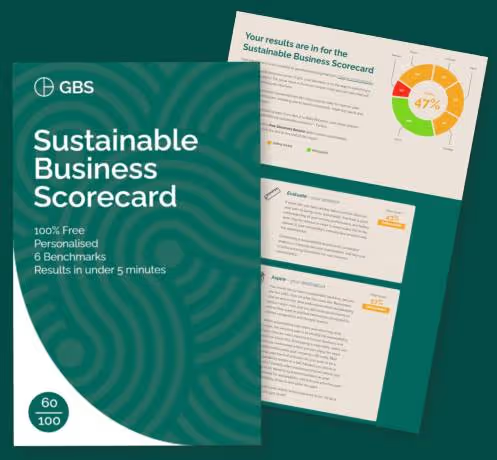
Discover your sustainability strengths and weaknesses with the Sustainable Business Scorecard.
Get My Sustainability ReportArticle
Our food system is responsible for a third of all carbon emissions and half of net deforestation. To meet our climate and biodiversity targets we need to make food sustainable.
Guide
With over 20 years' experience implementing sustainability for a range of businesses, we have put together 6 steps to make being green EASIER for business.
Tool
With the price for energy and resources increasing, the circular economy can help reduce costs and improve environmental performance. Here we provide some tools for businesses keen to know more about circular economy principles.
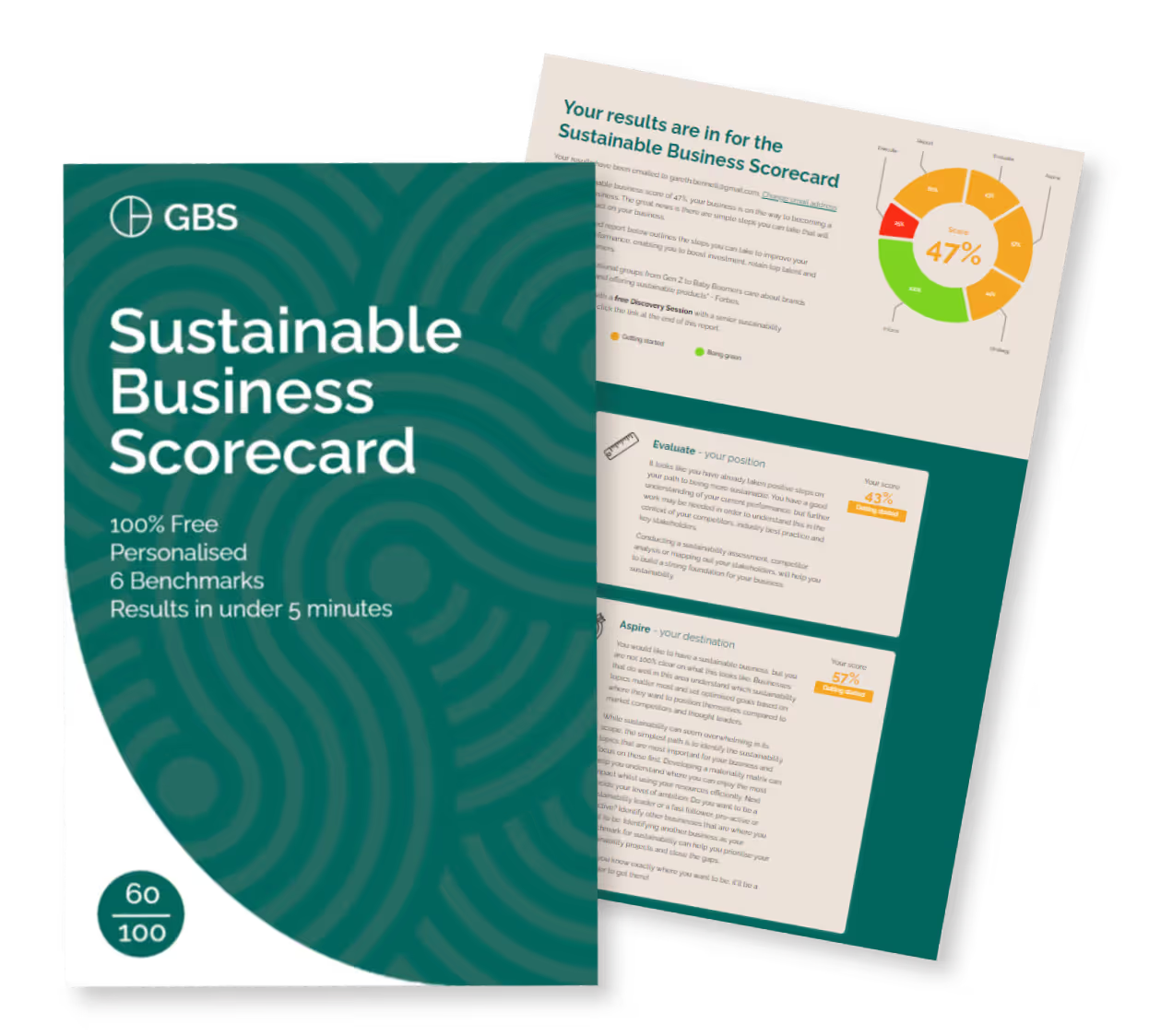
Our Sustainability Scorecard helps businesses quickly assess their current sustainability performance across key ESG topics.
In less than five minutes, you'll receive:

A sustainability rating
Practical recommendations
Identification of key strengths
A clearer sustainability roadmap
Areas for improvement

Instant results. No credit card required.


