Guide
If your understanding of B Corp Certification begins with achieving 80 points in the B Impact Assessment, it is time for an update. The new B Lab Standards change both how certification is assessed and how small businesses should prepare for it.
Under the previous model, businesses worked towards an overall score. The new standards require a more balanced approach across seven Impact Topics. The question is no longer simply, “How do we earn enough points?” It is: “Which responsible business practices should apply to our organisation, and how can we demonstrate that they operate in practice?”
Under the previous standards, businesses worked towards an overall verified score of at least 80 points. Strong performance in one area could compensate for weaker performance elsewhere, so preparation often became a search for additional initiatives that would increase the final score.
The new standards take a different approach. Instead of rewarding an overall score, they require businesses to meet applicable requirements across seven Impact Topics, including governance, workers, climate, human rights, environmental stewardship, inclusion and collective action.
For most smaller businesses, this changes how preparation should begin. The objective is no longer to identify activities that generate more points. It is to understand which requirements apply, evaluate existing business practices and develop proportionate systems that demonstrate those practices consistently.
Many businesses assume B Corp Certification begins with completing the assessment. Under the new standards, it begins by understanding the business itself.
The legal entity seeking certification, the size of the business, where it operates and how it is structured all influence which requirements apply. Before thinking about policies or evidence, you first need to establish what the standards actually expect from your business.
That makes B Corp Readiness & Scoping stage one of the most valuable parts of the project rather than a simple administrative exercise. A structured readiness review helps you identify which requirements apply, understand your current position and build a realistic certification roadmap before you start collecting evidence.
One of the most common mistakes businesses make is writing policies before understanding what the standards actually require. It is tempting to start producing documents because they feel like visible progress, but policies only add value when they support the way a business genuinely operates.
A better approach is to begin with diagnosis rather than documentation. Understanding where your business is today before deciding what needs to change is a principle that applies to sustainability more broadly and forms the foundation of an effective sustainability strategy.
This produces systems that are proportionate, practical and much easier to maintain. It also avoids spending time developing documents that may never be needed.
Many small businesses already do far more than they realise. They look after their employees, build long-term relationships with customers, choose suppliers carefully and try to minimise waste. These everyday decisions often reflect the principles that B Corp is designed to recognise.
The challenge is rarely that good practices do not exist. More often, they have developed naturally over time and have never been documented or applied consistently across the business.
The new standards still recognise good business practices, but they also require businesses to demonstrate that those practices are operating consistently. For example, requirements relating to Climate Action are much easier to demonstrate when businesses already understand their carbon footprint and have begun measuring emissions consistently. For many businesses, the project is therefore less about introducing entirely new ways of working and more about capturing, strengthening and evidencing what already exists.
Once you understand which requirements apply, the assessment can guide your evidence collection. Rather than gathering every policy, certificate and record at the outset, allow the assessment to identify what evidence is genuinely needed and when it will be required.
This keeps the project focused on the requirements that matter, avoids unnecessary work and makes it easier to prioritise your time.
An organised evidence plan also makes verification much smoother. Instead of searching for documents at the last minute, you build a structured evidence library as the project progresses, making both internal review and external verification more efficient.
The way you approach your first month has a significant impact on how efficiently the rest of the project progresses. Investing time in the right foundations reduces unnecessary work, helps you focus on what matters and makes later stages much easier to manage.
A practical first month could look something like this:
Make sure you understand which legal entity is seeking certification and how the business will be assessed.
Enter accurate information about your business so that the assessment can determine which requirements apply.
Resist the temptation to jump ahead. First understand exactly what the standards expect from your business.
Compare your current practices with the applicable requirements to understand where improvement will have the greatest impact.
Not everything needs to happen at once. Focus first on the changes that are most important for your business and certification journey.
Collect documents and records as they become relevant so that evidence is organised and ready for verification when it is needed.
Following these steps creates a strong foundation for the rest of the project. Rather than reacting to the standards, you'll have a clear roadmap that helps you prioritise your time and build towards certification in a structured way.
Whether you're preparing for B Corp Certification or working towards wider sustainability goals, taking a structured approach helps avoid unnecessary work and makes progress much easier to manage.
The new B Lab Standards raise the expectations for certification, but they also provide a clearer and more consistent framework for responsible business. Rather than focusing on achieving enough points, small businesses are encouraged to build proportionate systems that reflect how they already operate and improve them over time.
For many businesses, that is a positive change. Existing strengths remain valuable, improvements can be prioritised sensibly and certification becomes a structured journey rather than a search for points.
The best place to begin is not by writing policies or collecting documents. It is by understanding your business, identifying which requirements apply and building a practical plan from there.
Our Readiness & Scoping service follows the same structured approach described in this guide, helping you understand which requirements apply, identify your priorities and build a practical roadmap towards certification.
Book a B Corp Readiness & Scoping session with us today.
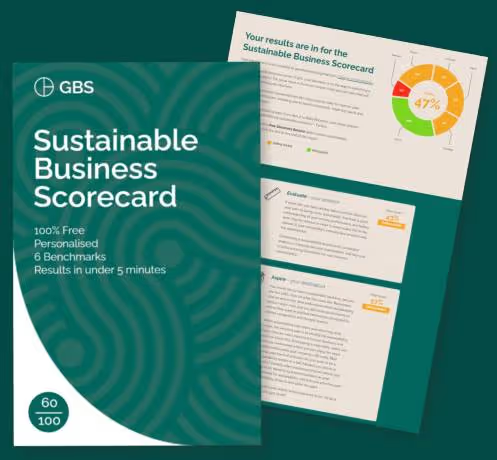
Discover your sustainability strengths and weaknesses with the Sustainable Business Scorecard.
Get My Sustainability ReportArticle
Our food system is responsible for a third of all carbon emissions and half of net deforestation. To meet our climate and biodiversity targets we need to make food sustainable.
Guide
With over 20 years' experience implementing sustainability for a range of businesses, we have put together 6 steps to make being green EASIER for business.
Article
The facts and fundamentals of climate change: what it is, when it will happen and what businesses can do about it.
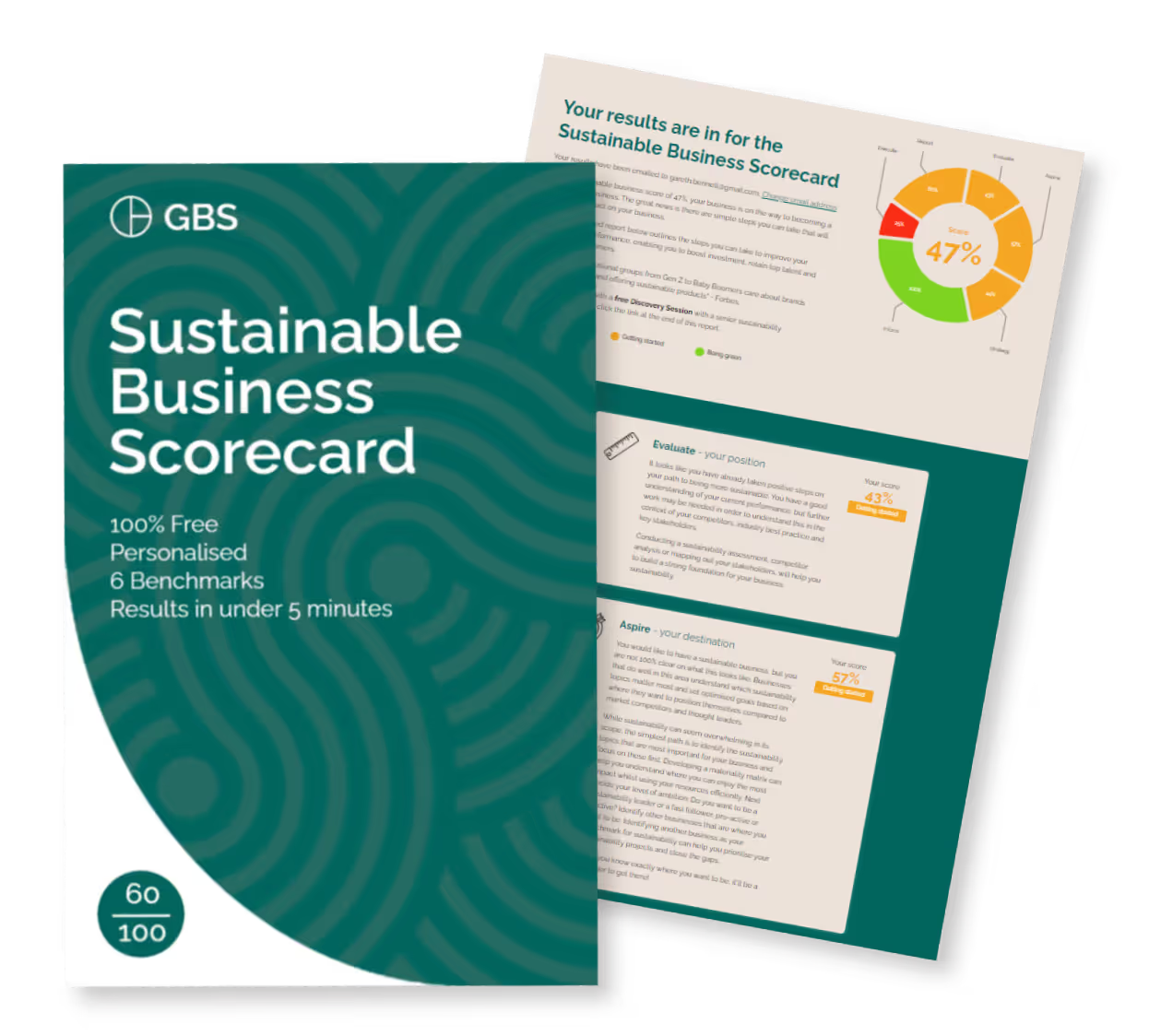
Our Sustainability Scorecard helps businesses quickly assess their current sustainability performance across key ESG topics.
In less than five minutes, you'll receive:

A sustainability rating
Practical recommendations
Identification of key strengths
A clearer sustainability roadmap
Areas for improvement

Instant results. No credit card required.


