Article
You invested time in developing a sustainability strategy. The priorities were agreed, senior leaders approved it and the direction was shared across the business. A year later, however, progress is difficult to see.
A few projects may have moved forward because one or two committed people kept them alive, but everyday decisions still look much the same. Teams are unsure what the strategy means for them, suppliers have not changed how they work and the strategy has not become part of how the business operates.
It is tempting to conclude that the strategy was wrong, that people did not understand it or that the launch simply needs to be repeated. Before starting again, there is a more useful question to ask: what is missing between agreeing the strategy and putting it into practice?
The word strategy is often used generously in sustainability. A Net Zero target, a list of commitments or a collection of preferred projects may all be described as a strategy. These can set direction and build momentum, but they do not necessarily explain how the business will move from its current position to the future it wants to create.
A sustainability strategy should turn aspirations into a structured and achievable programme of work. It should establish priorities, make choices and trade-offs, define the route forward and sequence the main areas of activity. It should also consider responsibilities, resources, risks and dependencies, together with how progress will be governed and reviewed. In the EASIER™ methodology, Aspire clarifies where the business wants to be; Strategy determines how it will get there.
If your business has set worthwhile goals but has not yet translated them into clear priorities, choices and a coordinated programme of work, the strategy may need further development. Our Sustainability Strategy service explains how we help small businesses turn sustainability aspirations into a workable route forward. If those choices are already in place and your strategy provides a credible route for action, keep reading. A sound strategy can still remain on paper when the people and partners needed to deliver it have not been properly involved.
Approval can give a sustainability strategy a clear mandate, while good communication can make its direction widely understood. Implementation asks people to go further. They must interpret those priorities in the context of their work and use them to make different decisions. Knowing that the strategy exists is not the same as knowing how to act on it.
This gap can appear in different parts of the business, but the underlying problem is the same: a broad strategic priority has not yet been translated into practical action. A procurement manager may know that supplier emissions need to fall but not how this should affect tenders, contracts or supplier reviews. A sales team may understand the company’s commitments but be unsure what it can say confidently to customers. An operations team may support a waste-reduction objective without having the skills or guidance needed to redesign the process.
The strategy may also depend on people outside the business. Suppliers may need to understand what will be expected of them and have time to respond. Customers can provide insight into future requirements, while strategic partners may contribute expertise or delivery capability the business does not hold internally. Unless those relationships are actively brought into the process, the business may be waiting for contributions it has not yet enabled.
When progress is limited, leaders may decide that the strategy needs to be rewritten. Sometimes that is the right conclusion: circumstances change, assumptions prove false and priorities need to be reconsidered. But starting again too quickly can mean overlooking a different problem.
A sound strategy can still stall if the business moves straight from agreeing the route to expecting delivery. There is work to do between Strategy and Execute. The strategy must be explained in ways that make sense to different people, practical barriers need to be understood, relevant skills may need to be built and external partners may need to be brought into the work. Without that preparation, a reasonable strategy can still be difficult to implement.
In the EASIER™ methodology, we call this stage Involve because its purpose is to bring the right people and partners into the work before implementation begins. Strategy decides how the business intends to move forward. Involve prepares the people and relationships needed to make that route work. Execute then turns the agreed direction into clear responsibilities, processes, controls and managed action.
Involvement is sometimes treated as a softer part of change, focused mainly on enthusiasm, buy-in or giving employees a chance to express their views. Those outcomes can matter, but involvement has a more practical purpose: it helps make the strategy workable.
The people closest to delivery can test the strategy against operational reality. They may spot missing data, supplier constraints or conflicts between priorities, and suggest simpler processes, better sequencing or existing systems that can be adapted. An operations team might propose using an established quality process rather than creating a separate sustainability system. Procurement may know which suppliers are ready to collaborate, while Sales may identify a customer conversation that should happen before the business invests in a new offer.
Involvement also prepares people and partners to contribute. Employees may need role-specific guidance or training, managers may need support to turn strategic priorities into team objectives, and suppliers may need clear expectations and realistic lead times. This does not mean consulting everyone on every decision. Leadership still sets the direction and makes the final choices; the aim is to involve those whose input or cooperation the strategy depends on.
When a strategy stalls, the first signs often appear in day-to-day work. A team may keep using an old process, a supplier may miss a deadline or a manager may hesitate to make a decision. From the top of the business, this can look like resistance or a lack of commitment. Instead, it may show that people do not yet have what they need to act.
The barrier may be a lack of skills, cooperation or confidence. A team may understand the objective but need training before it can change the way it works. A supplier may be willing to help but need an earlier conversation about what is possible and how the two businesses can work together. An employee may see a clear opportunity for improvement but not feel authorised to challenge an established process or make a different decision.
Not every concern will require the strategy to change, and not every delay will reveal a genuine barrier. But listening carefully can show where the business needs to build capability, strengthen cooperation or give people greater confidence to act. Those insights can be the difference between a strategy that remains on paper and one that begins to change the business.
A sustainability strategy rarely depends on one team alone. Leaders set direction and resolve trade-offs, managers turn priorities into day-to-day expectations, and employees understand how the work actually happens. Each group sees a different part of the picture, so involving them helps the business connect strategic decisions with operational reality.
The same applies outside the business. Suppliers may hold the data, materials or technical knowledge needed to deliver a change. Customers can explain future requirements and show where sustainability may create commercial value. Service providers, strategic partners and industry groups can add expertise, capacity and shared solutions that the business does not have on its own.
This does not mean asking everyone to comment on every decision. The useful question is: whose input or cooperation does this part of the strategy depend on? Involve those people at the right point, for a clear purpose, and show how their contribution will be used.
Bringing people into the work means creating a conversation, not simply giving them more information. The strategy still needs to be explained clearly. Involvement then gives employees, suppliers, customers and partners a chance to connect it with what they know and the role they may play.
That conversation helps the business move from a broad direction to practical delivery. It can reveal what the strategy means for different roles, what may make it difficult to implement and what support is needed. It can also surface knowledge, concerns and ideas that were not available when the strategy was developed.
The result is a feedback loop between the strategy and the people putting it into practice. What the business learns may lead to clearer guidance, better sequencing or changes to the implementation plan. It may also show that part of the strategy needs review. The aim is not to reopen every decision, but to improve delivery as the business learns what works.
Before deciding that the strategy has failed, work through these five questions. Together, they can show whether the business needs to strengthen the strategy, involve people and partners more effectively, or do both.
Has the business made clear choices about its priorities, route, trade-offs and use of resources? If those decisions are still missing, the immediate need is to develop the strategy before expecting people to implement it.
Consider who holds relevant knowledge, decision-making authority or practical influence for each priority. This may include leaders, managers and employees, as well as suppliers, customers, advisers and strategic partners.
People need to understand more than the overall direction. They should know what the strategy changes for their role, decisions and relationships, and where their contribution fits.
Can they raise practical barriers, suggest better approaches and explain what support is needed? A two-way process only adds value when the business listens and responds to what it learns.
Check whether the necessary skills, guidance, confidence and cooperation are in place. Responsibilities should be clear, support should be available and feedback should continue once implementation begins.
The purpose is not to reopen the strategy automatically. It is to locate the gap more accurately, so the business can strengthen the right stage rather than starting again without understanding what went wrong.
When a sustainability strategy stalls, the answer is not always to rewrite it or repeat the launch. First check whether the business has a genuine strategy. If the route is sound, examine whether the people and partners needed to deliver it have been properly involved.
Involvement tests the strategy against day-to-day reality, improves the way it will be delivered and prepares people to act. It brings useful knowledge into the process, builds skills and confidence, and creates cooperation across teams and external relationships.
Before moving further into execution, identify the employees, managers, suppliers, customers and partners the strategy depends on. Consider what each needs to understand, what they can contribute and how their feedback will shape implementation. This is what turns a strategy from something people have been told about into something they are prepared and able to help deliver.
GB Sustainability can help you build the understanding, skills, engagement and external cooperation needed to move your sustainability strategy from paper into practice. Explore our sustainability services or book a sustainability call.
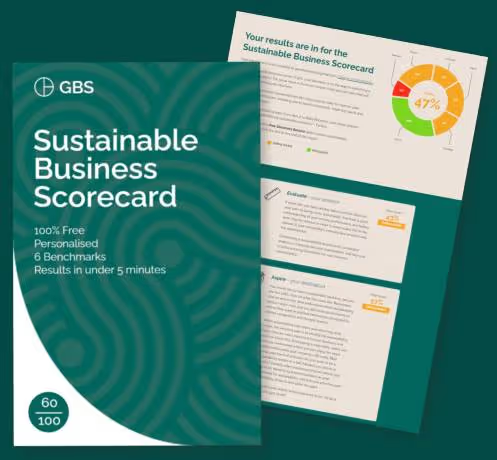
Discover your sustainability strengths and weaknesses with the Sustainable Business Scorecard.
Get My Sustainability ReportTool
The United Nations Sustainable Development Goals, or SDGs, provide a robust framework for businesses large and small to formulate their strategy.
Article
Our food system is responsible for a third of all carbon emissions and half of net deforestation. To meet our climate and biodiversity targets we need to make food sustainable.
Tool
If you are a business that wants to set net zero emissions targets, check out these essential tools to help you get on the right path.
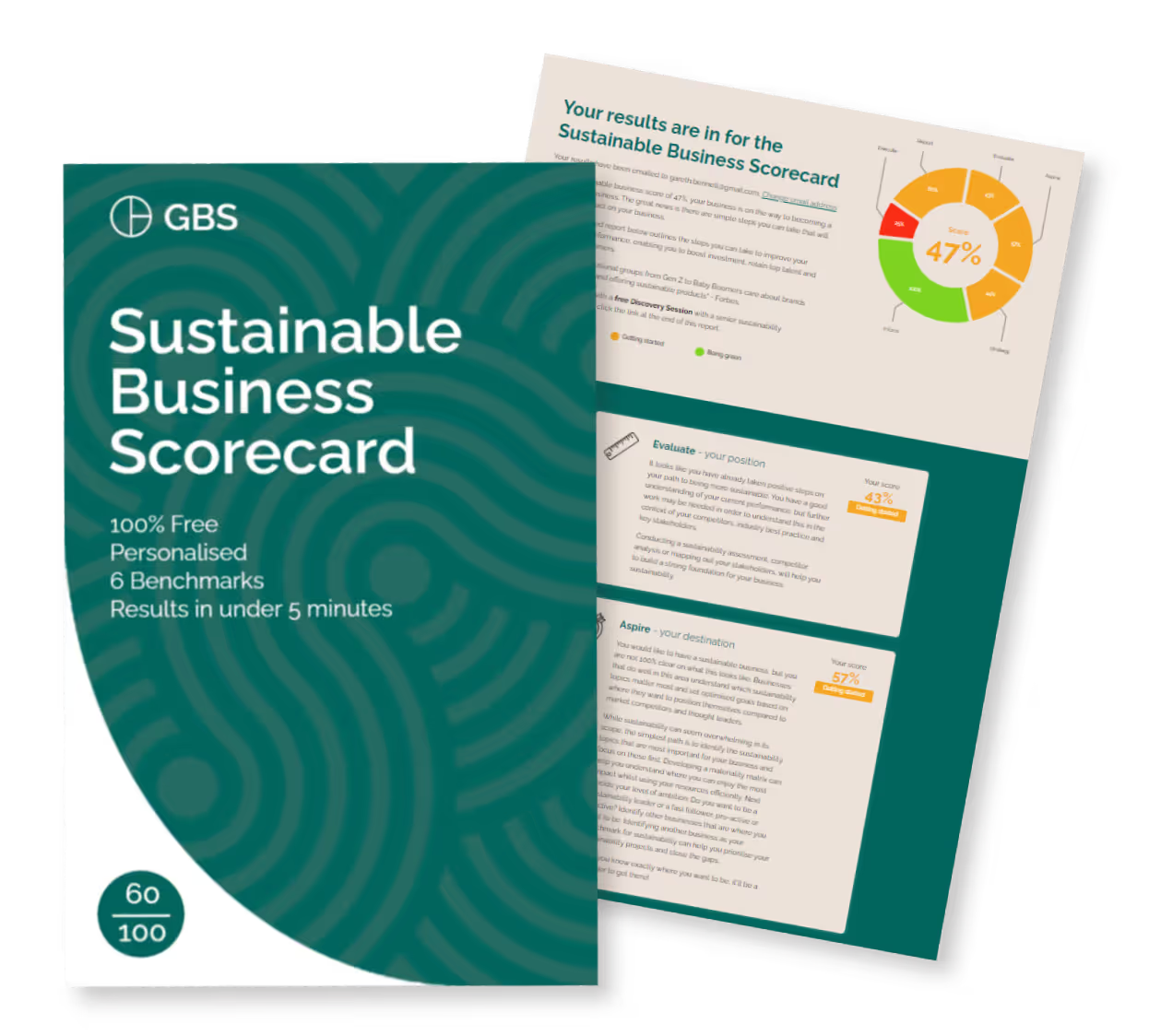
Our Sustainability Scorecard helps businesses quickly assess their current sustainability performance across key ESG topics.
In less than five minutes, you'll receive:

A sustainability rating
Practical recommendations
Identification of key strengths
A clearer sustainability roadmap
Areas for improvement

Instant results. No credit card required.


